
CaRMS for IMGs: How to Match into Canadian Residency
How the CaRMS Match works for IMGs: eligibility, streams, application documents, interviews and how to build a competitive Canadian residency application.

If you're an international medical graduate hoping to train in Canada, CaRMS is the system that decides whether that happens. It's not a formality. It's the entire process. Every residency spot in the country, in every province, for every specialty, gets filled through this one centralized match.
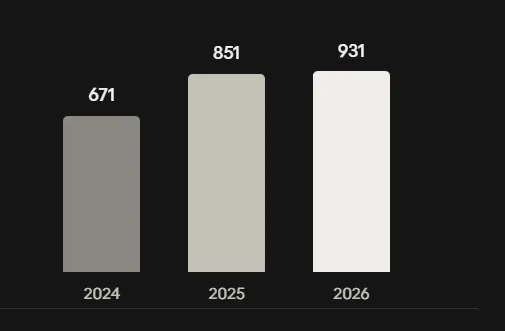
So what is CaRMS, exactly? The Canadian Resident Matching Service is the national body that runs the R-1 Main Residency Match. This is the process that pairs medical graduates with residency programs across Canada. For IMGs, it's also one of the most competitive matches in the world. In the most recent match cycle, 931 IMGs matched to residency positions, up from 851 the year before. However, that number sits against a much larger pool of applicants competing for a limited set of IMG-designated seats.
This guide provides an overview of the Canadian residency application process for International Medical Graduates (IMGs). It covers eligibility criteria, exam and document requirements, a month-by-month timeline, and common pitfalls candidates encounter. If you're serious about applying to the Canadian Resident Matching Service (CaRMS), consider this guide your starting point.
Quick Answer
CaRMS (the Canadian Resident Matching Service) runs the R-1 Main Residency Match, the national process that places medical graduates into Canadian residency programs. IMGs must meet national eligibility (a recognized medical degree, passed MCCQE Part I, and passed NAC Examination) plus province-specific requirements that vary significantly across Canada.
In This Guide
- What Is CaRMS, and Why Does It Matter So Much for IMGs?
- Who Is Eligible for CaRMS as an IMG?
- What You Need Before You Apply
- The CaRMS Timeline: How the Match Actually Unfolds
- The Second Iteration: What Happens If You Don't Match
- Common Mistakes IMGs Make with CaRMS
- Frequently Asked Questions
What Is CaRMS, and Why Does It Matter So Much for IMGs?
CaRMS runs the R-1 Main Residency Match. It's the single national process through which nearly all first-year residency positions in Canada are filled. Both Canadian medical graduates (CMGs) and international medical graduates apply through the same platform. However, they compete under very different conditions.

Here's the part that catches a lot of IMGs off guard: healthcare in Canada is managed provincially, not federally. As a result, each province sets its own eligibility rules, its own number of IMG-designated seats, and sometimes its own extra requirements, like return-of-service agreements or provincial residency history.
A candidate who's fully eligible in Manitoba might not qualify for the exact same program type in Ontario. There's no single national standard for IMG eligibility. Instead, there are thirteen overlapping sets of provincial rules layered on top of one national match system.
This is why so much of CaRMS strategy for IMGs isn't just "study hard and interview well." It's understanding which provinces and programs are realistically open to you before you spend money applying to ones that aren't.
💡 Did You Know?
IMG matches to Canadian residency have grown for three consecutive cycles: 671 in 2024, 851 in 2025, and 931 in 2026. Growth in absolute numbers doesn't necessarily mean growth in match rate, since the applicant pool has also grown; always check the current cycle's data overview on carms.ca rather than relying on a prior year's figures.
Who Is Eligible for CaRMS as an IMG?
At the national level, CaRMS sets a baseline. To participate in the R-1 Main Residency Match as an IMG, you generally need to:
- Be attending or have graduated from a medical school listed in the World Directory of Medical Schools.
- Have written and passed the National Assessment Collaboration (NAC) Examination.
- Have written and passed the Medical Council of Canada Qualifying Examination (MCCQE) Part I.
Featured Snippet
CaRMS IMG eligibility, at a minimum: a medical degree from a school listed in the World Directory of Medical Schools, a passed NAC Examination, and a passed MCCQE Part I. Provinces layer additional, varying requirements on top of this national floor.
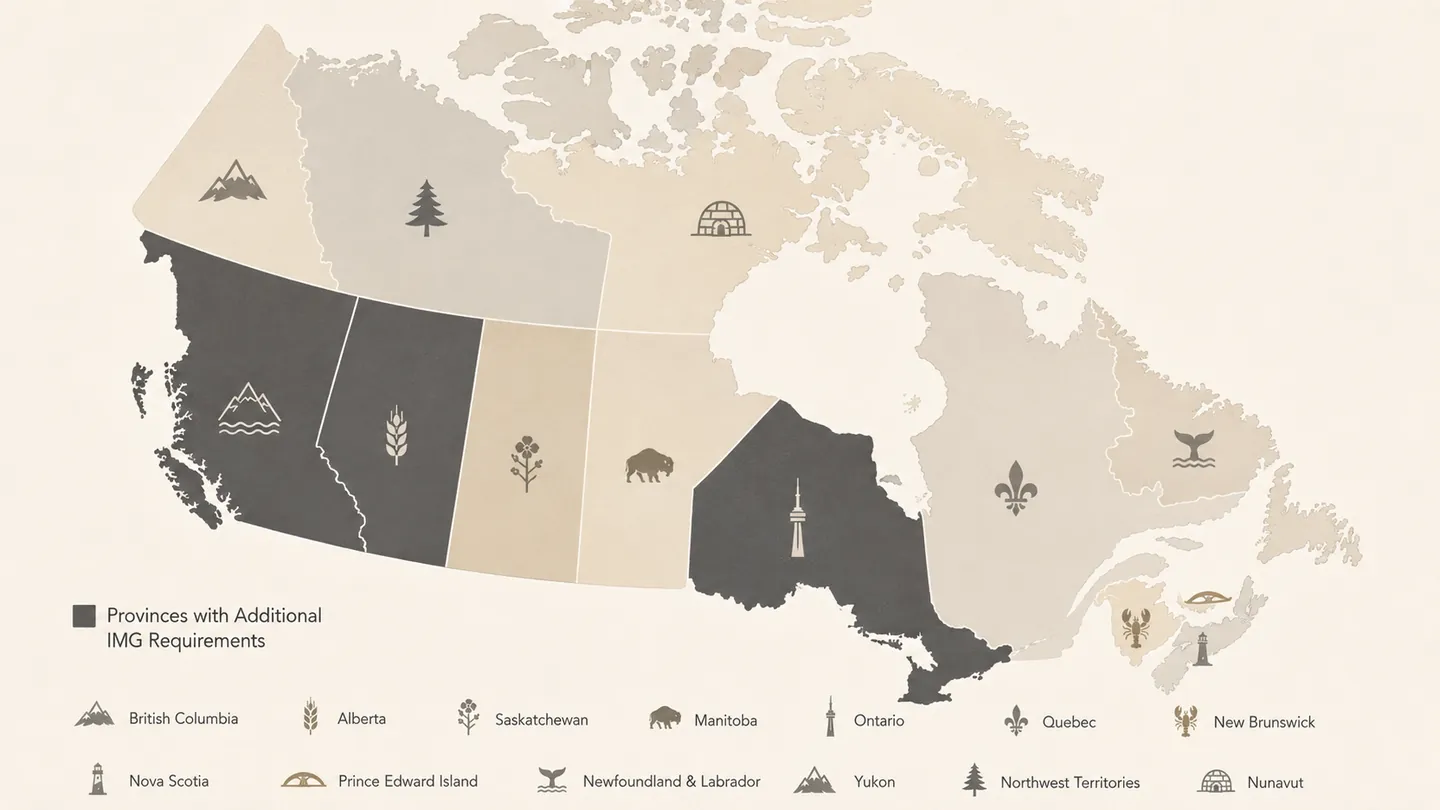
That's the floor, not the whole picture. Individual provinces layer on additional requirements, and some of these have shifted meaningfully in recent cycles. For example, Ontario now requires IMG applicants to have completed at least two years of high school in Ontario, or qualify for a specific exemption, to access IMG-designated positions in the first iteration of the match.
Applicants who don't meet that criterion can still apply in the second iteration, but that's a materially different, and more competitive, path.
Other provinces run their own gatekeeping programs entirely. Alberta's AIMG Program and British Columbia's IMG Clinical Assessment Program both require separate applications and approval before you can even apply to IMG-designated positions in those provinces through CaRMS. Miss that pre-approval step, and no amount of CaRMS preparation will open the door.
Practical Takeaway
Before you build a province list, check that province's current IMG eligibility criteria directly on carms.ca. Rules that applied last cycle may not apply this one.
What You Need Before You Apply
Competitive CaRMS applicants don't build their file in the weeks before the application opens. They build it over one to two years. By the time applications open, typically in September, the strongest IMG candidates already have:
- MCC credential verification complete. Your medical degree and training history need to be source-verified through the Medical Council of Canada before you can move forward.
- MCCQE Part I passed. This is a national requirement for IMG eligibility. MCCQE Part II isn't required to apply, but it is required later for independent licensure.
- NAC OSCE passed. The National Assessment Collaboration Objective Structured Clinical Examination tests clinical skills against a Canadian standard, and it's one of the two exam pillars CaRMS checks for IMG eligibility.
- At least one Canadian clinical experience. An elective or observership in a Canadian clinical setting. This one is easy to underestimate and hard to arrange last-minute, since Canadian electives typically require months of lead time to secure.
- At least one Canadian reference letter. Programs weigh references from supervisors who've actually seen you work in the Canadian system more heavily than references from abroad, fair or not.
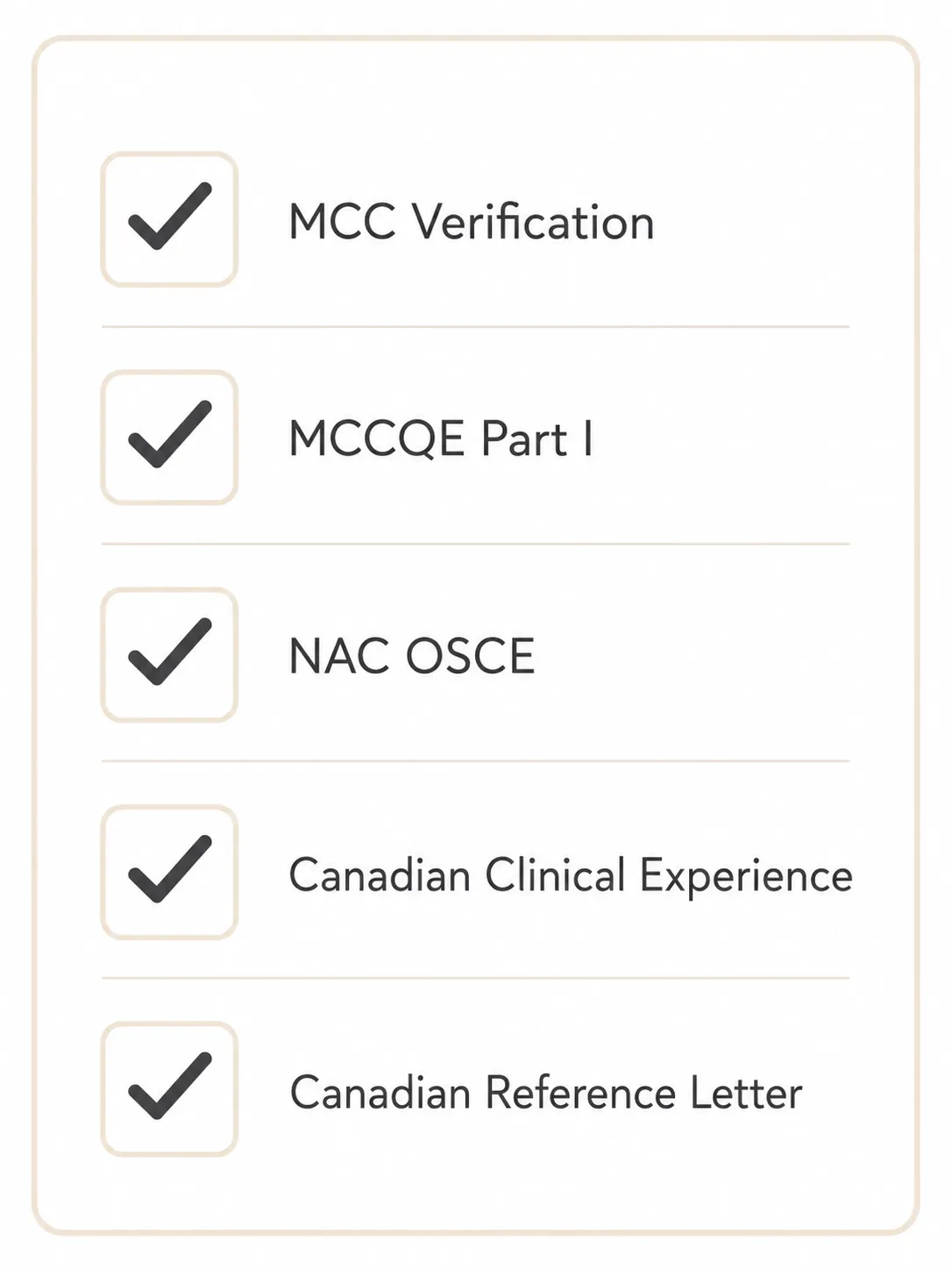
Missing any single one of these doesn't necessarily disqualify you. It does, however, put you at a real disadvantage against candidates who arrived with a complete file. Canadian clinical experience and Canadian references are the two most commonly missing pieces. They're also the two hardest to fix on short notice.
⚠️ Common Mistake
Assuming exam passes alone make you competitive. MCCQE Part I and the NAC OSCE establish eligibility, not competitiveness. Programs weigh Canadian clinical exposure and references heavily on top of exam results.
The CaRMS Timeline: How the Match Actually Unfolds
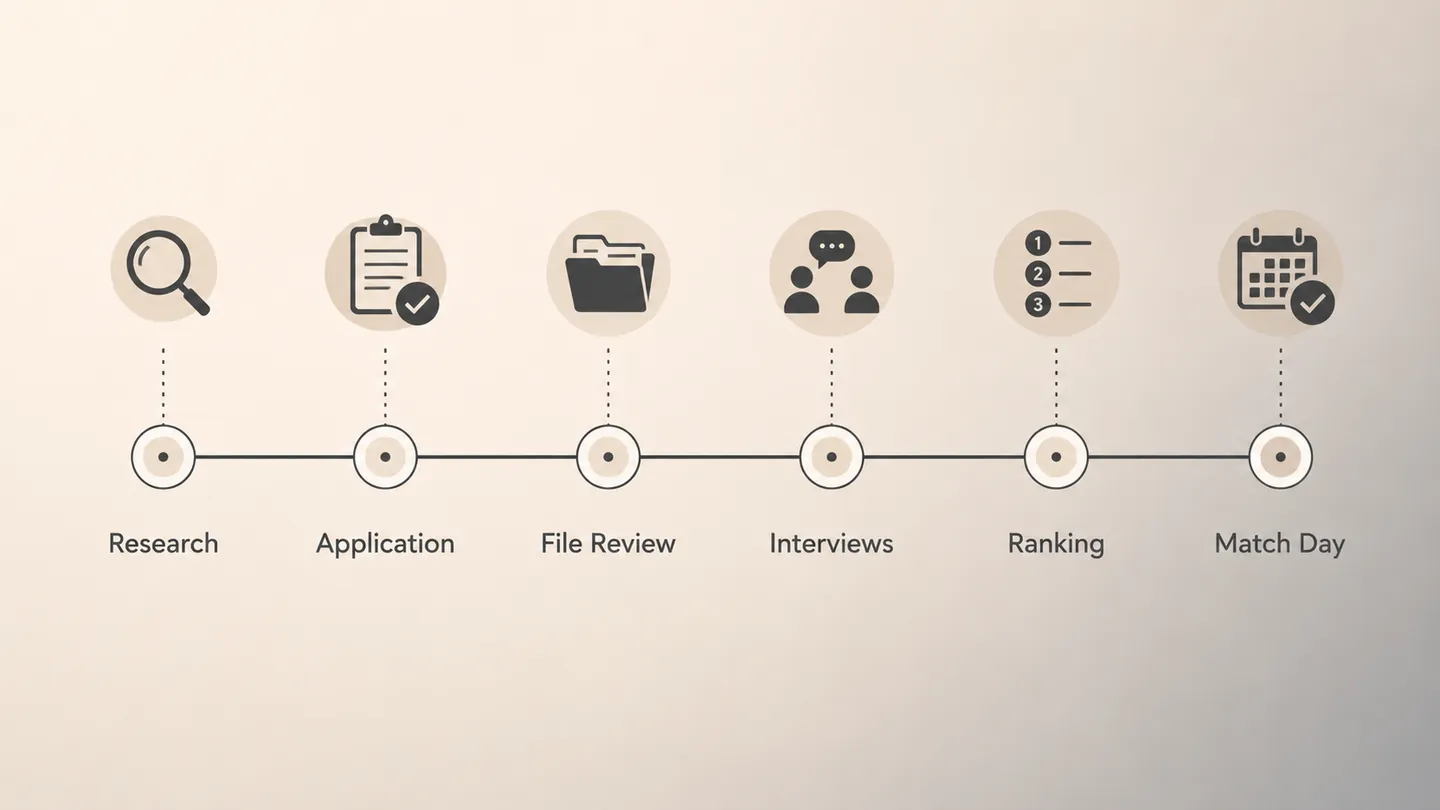
The R-1 Main Residency Match runs on a fixed annual cycle. There's no rolling admission, and there's no making up a missed deadline. Miss the application window, and you wait a full year for the next cycle.
Broadly, the cycle looks like this:
| Phase | Timing | What Happens |
|---|---|---|
| Research & Preparation | July: September | Finalize eligible provinces/programs, request translations, start MSPR and reference process |
| Application Period | September: November | CaRMS opens, program descriptions post, applications and documents submitted |
| File Review | November: January | Programs review completed applications; reference translations finalized |
| Interviews | January: February | IMG interviews scheduled individually by each program |
| Ranking Period | February | Applicants and programs submit confidential rank order lists (ROL) |
| Match Day | March / April | Results released; unmatched candidates become eligible for the second iteration |
Unlike Canadian medical school graduates, who have a coordinated national interview period for out-of-town programs, IMG interviews are scheduled individually by each program with no fixed national window. This means your interview calendar can get complicated fast if multiple programs want you around the same dates.
After interviews wrap up, applicants and programs each submit a confidential rank order list (ROL). CaRMS uses an algorithm that always favors the applicant's ranking, attempting to match each person to their highest-ranked program that also ranked them, working down the list until every match is resolved or exhausted.
Build your personal CaRMS calendar the moment application dates for the current cycle are published on carms.ca. The gap between an interview offer and a scheduled interview can be as short as a few days.
The Second Iteration: What Happens If You Don't Match
Not matching in the first iteration isn't the end of the process, but it does change your options. After first-iteration Match Day, all positions that weren't filled become available again in the second iteration. This round is open to unmatched CMGs, IMGs, and USMGs alike.
Your application information and documents carry over from the first iteration, so you're not starting from scratch, but you can update or add to your file before reapplying. Second-iteration positions tend to be more competitive precisely because they're pooling unmatched candidates from across the country against a smaller number of remaining spots. Ontario's IMG-designated positions, for instance, become open to IMGs who didn't meet the province's specific high-school criterion only in this second round.
If you don't match in either iteration, most candidates use the following year to strengthen exactly what was weakest: more Canadian clinical exposure, stronger references, a broader or better-targeted province list, or improved interview performance.
Common Mistakes IMGs Make with CaRMS
- Applying too broadly without checking provincial eligibility first. Spending application fees on programs you're not actually eligible for wastes both money and, more importantly, time you could spend strengthening a realistic application.
- Underestimating how much weight Canadian clinical experience carries. An excellent record from your home country doesn't substitute for recent, in-person Canadian clinical exposure in the eyes of most program reviewers.
- Leaving reference requests too late. Canadian supervisors get flooded with reference requests during application season.
- Not tracking province-specific programs separately. Alberta's AIMG Program and BC's IMG Clinical Assessment Program both require their own applications, on their own timelines, completely separate from CaRMS itself.
- Assuming last year's rules still apply. Provincial eligibility criteria, like Ontario's recent high-school residency requirement, have changed meaningfully in recent cycles.
Real-World Scenario
An IMG with strong exam scores and a completed MCCQE Part I applied to twelve programs across four provinces without checking province-specific eligibility first. Three of those programs rejected the application outright because the candidate didn't meet province-specific pre-approval requirements, wasting both application fees and file-review time that could have gone toward stronger, eligible options.
Key Takeaways
- CaRMS runs the R-1 Main Residency Match, the single national process for first-year Canadian residency positions, but eligibility rules vary significantly by province.
- Core IMG eligibility requires a recognized medical degree, a passed MCCQE Part I, and a passed NAC Examination, but this is a floor, not a guarantee of eligibility everywhere.
- Competitive applicants build their file over one to two years, prioritizing MCC verification, MCCQE Part I, the NAC OSCE, Canadian clinical experience, and Canadian references.
- The match cycle runs September through March/April, with no rolling admission and no way to make up a missed deadline.
- A second iteration exists for unmatched candidates, but positions there tend to be more competitive.
- Provinces like Alberta and British Columbia require separate, province-specific approval programs before you can apply to their IMG-designated positions.
Frequently Asked Questions
What GPA or exam scores do I need to match through CaRMS as an IMG?
CaRMS doesn't publish a minimum score threshold; individual programs set their own review criteria. Passing MCCQE Part I and the NAC Examination establishes baseline eligibility, but competitive applicants typically pair strong exam performance with solid Canadian clinical experience and references.
Do I need both the NAC OSCE and MCCQE Part I to apply?
Yes. National IMG eligibility for the R-1 Main Residency Match requires passing both the NAC Examination and MCCQE Part I. Exam requirements can have province-specific exceptions, so confirm current requirements directly on carms.ca for your target provinces.
How many IMGs actually match through CaRMS each year?
The number has been rising: 671 IMGs matched in 2024, 851 in 2025, and 931 in 2026. That said, this sits against a much larger applicant pool, and match rates for IMGs remain significantly lower than for Canadian medical graduates.
Can I apply to every province if I'm an IMG?
Only if you meet each province's specific eligibility criteria, which vary and sometimes require separate pre-approval, as with Alberta's AIMG Program or BC's IMG Clinical Assessment Program. Always verify eligibility per province before applying rather than assuming national eligibility covers you everywhere.
What happens if I don't match in the first iteration?
You become eligible for the second iteration, which opens shortly after first-iteration Match Day and covers positions that remain unfilled. Your existing CaRMS documents carry over, and you can update your file before reapplying.
How early should I start preparing for CaRMS as an IMG?
Most competitive candidates start building their file one to two years before their target application cycle, since MCC verification, required exams, Canadian clinical electives, and strong references all take significant lead time to arrange.
Is family medicine easier to match into as an IMG?
Family medicine generally has higher IMG-designated position volumes and acceptance rates compared to many specialty programs, making it a common and strategic focus for IMG applicants, though it's still competitive and varies by province.
Does CaRMS require Canadian citizenship or permanent residency status?
Citizenship and immigration status affect which positions you're eligible for, since some provinces prioritize or restrict certain seats based on status, and this interacts with return-of-service obligations in some provinces. Verify status-related eligibility rules directly with CaRMS and your target provinces, since these details are not uniform nationally.
Conclusion
CaRMS rewards preparation more than almost any other part of the IMG journey. The exams matter, but so does the less glamorous work: confirming provincial eligibility before you apply, lining up Canadian clinical experience early, and building relationships with supervisors who can speak specifically to your readiness for Canadian residency training.
The IMGs who match tend to treat CaRMS less like a single application season and more like a multi-year project with a hard, unmovable deadline at the end. Start with eligibility, build your clinical and reference foundation early, and track provincial rules as closely as you track your own exam prep. Both can change the outcome just as much.
Next Step
Get the CaRMS application checklist
Get the free CaRMS application checklist and join the Sentia Telegram community, where IMGs preparing for the Canadian match share timelines, provincial eligibility updates, and interview experiences in real time. For the exams that sit at the center of your eligibility, Sentia's guides on the NAC OSCE and MCCQE Part I break down what each exam actually tests.